Krishnamurti on truth
"I feel that no one can lead another to truth, because truth is infinite; it is a pathless land, and no one can tell you how to find it... Nobody taught me, I assure you, nor have I learned what I am saying from books. But I have watched, I have struggled, and I have tried to find out. It is only when you are absolutely naked, free from all techniques, free from all teachers, that you find out."
"Let us understand this first of all. Now you are basing your ideas on conformity. You think that there is a standard, a way, by which you can find truth; but if you examine, you will discover that there is no path that leads to truth. In order to be led to truth, you must know what truth is, and your leader must know what it is. Isn't that so? I say that a man who teaches truth may have it, but if he then offers to lead you to truth and you are led, then both are in illusion. How can you know truth if you are still held by illusion? If truth is there it expresses itself. A great poet has the desire, the flame for creative writing, and he writes. If you have the desire, you learn the technique.
I feel that no one can lead another to truth, because truth is infinite; it is a pathless land, and no one can tell you how to find it. No one can teach you to be an artist; another can only give you the brushes and canvas and show you the colors to use. Nobody taught me, I assure you, nor have I learned what I am saying from books. But I have watched, I have struggled, and I have tried to find out. It is only when you are absolutely naked, free from all techniques, free from all teachers, that you find out." -- The Collected Works of J. Krishnamurti, Vol. I; Alpino, Italy, 1933
"You may not know what you're doing, but while you're doing it, you know who you are." -- Tom Wudl, Interview with Antrese Wood
"Senseless Variations of Light on the Retinas"
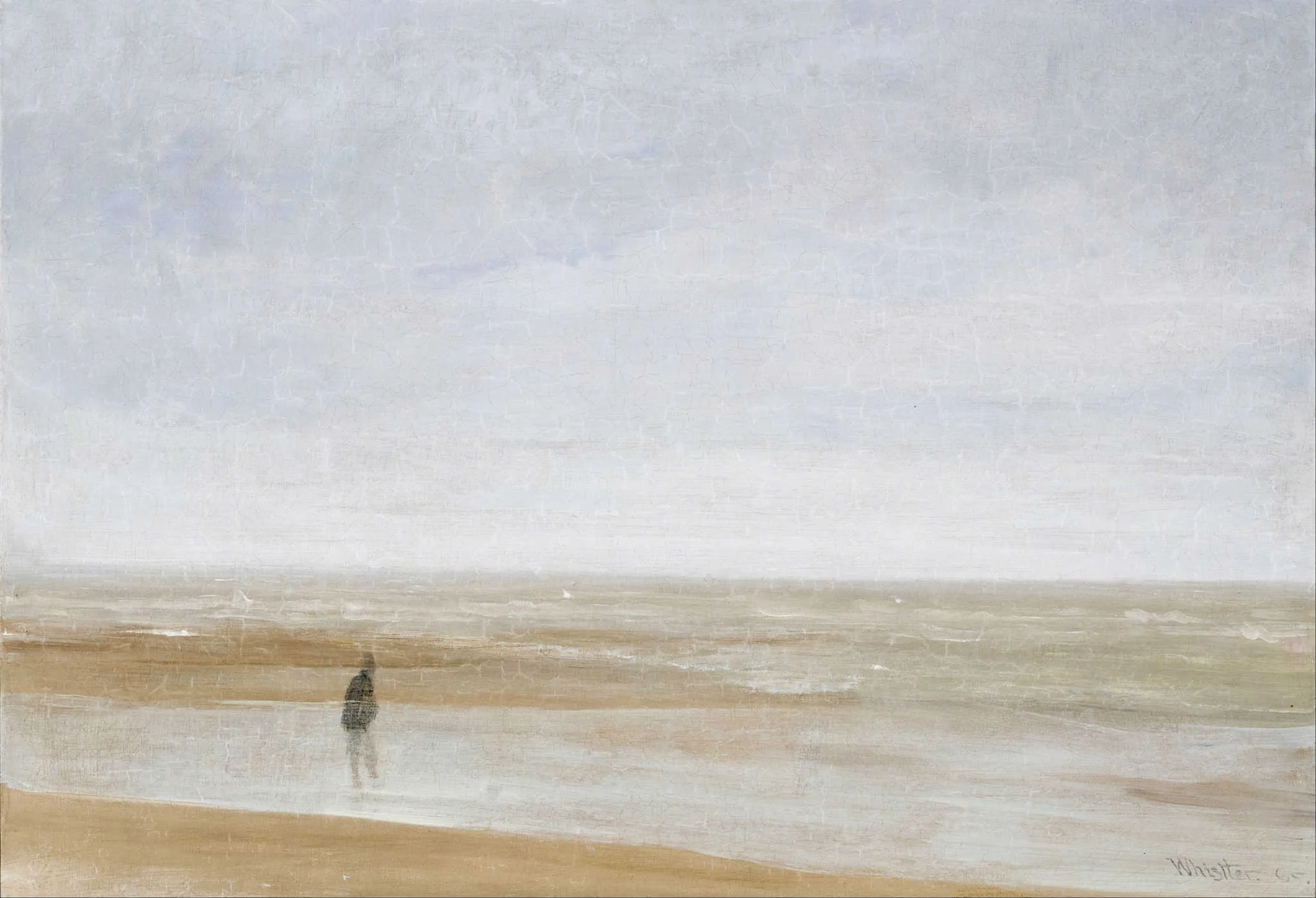
"James McNeill Whistler used to walk down to the Atlantic shore carrying a few thin planks and his paints. On the planks he painted, day after day, in broad blurred washes representing sky, water, and shore, three blurry light-filled stripes. These are late Whistlers; I like them very much...
"James McNeill Whistler used to walk down to the Atlantic shore carrying a few thin planks and his paints. On the planks he painted, day after day, in broad blurred washes representing sky, water, and shore, three blurry light-filled stripes. These are late Whistlers; I like them very much. In the high Arctic I thought of them, for I seemed to be standing in one of them. If I loosed my eyes from my shoes, the ground at my feet, or the chaos of ice at the shore, I saw what newborn babies must see: nothing but senseless variations of light on the retinas. The world was a color-field painting wrapped around me at an unknown distance; I hesitated to take a step."
Annie Dillard, from "Teaching a Stone to Talk"
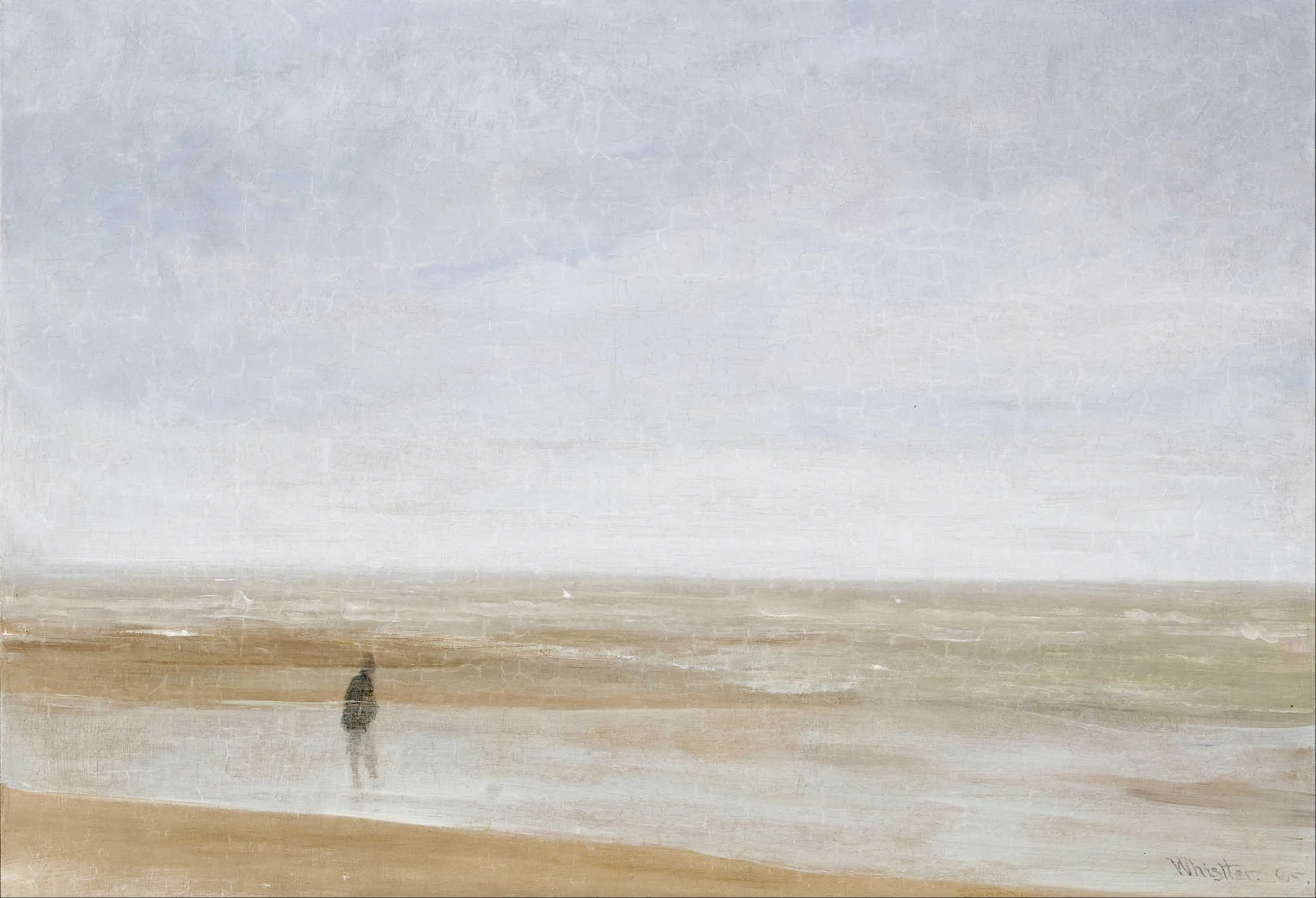
James McNeill Whistler, Sea and Rain
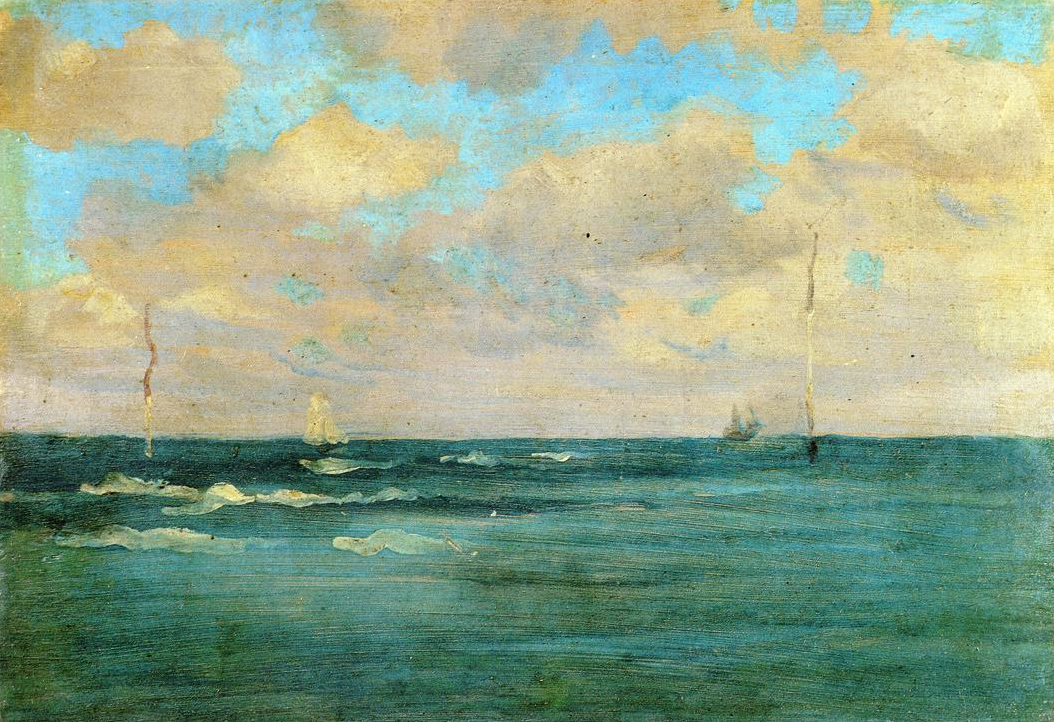
James McNeill Whistler, Bathing Posts
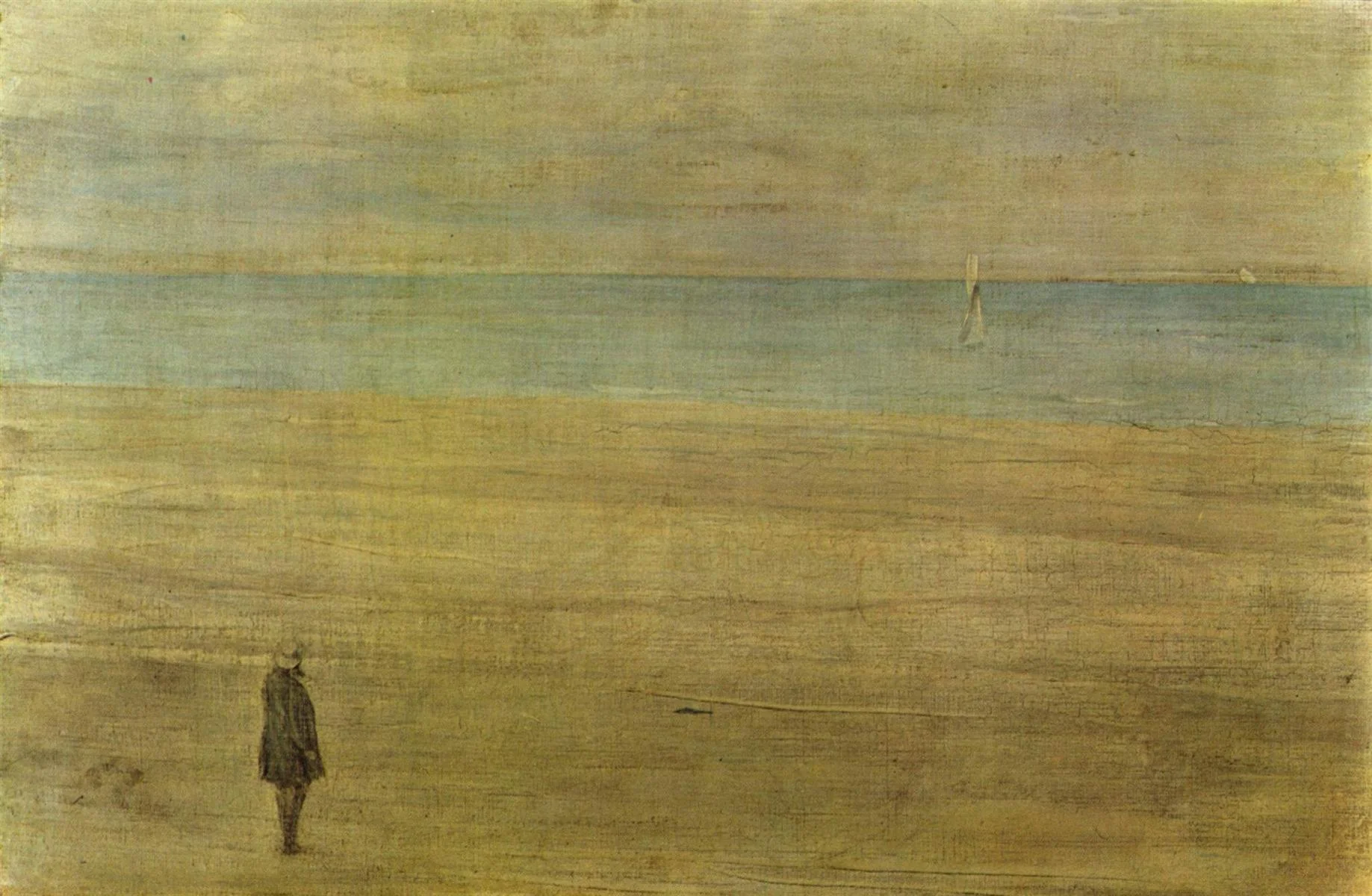
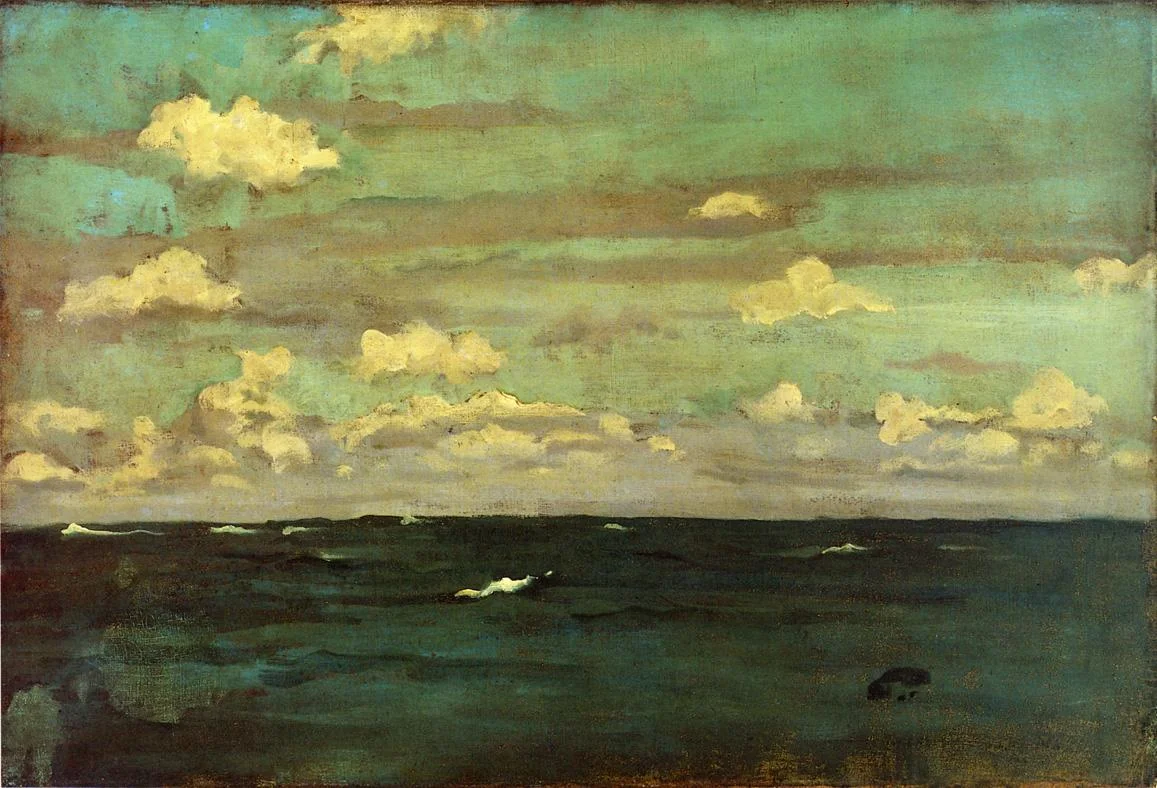
James McNeill Whistler, Seal Maiden
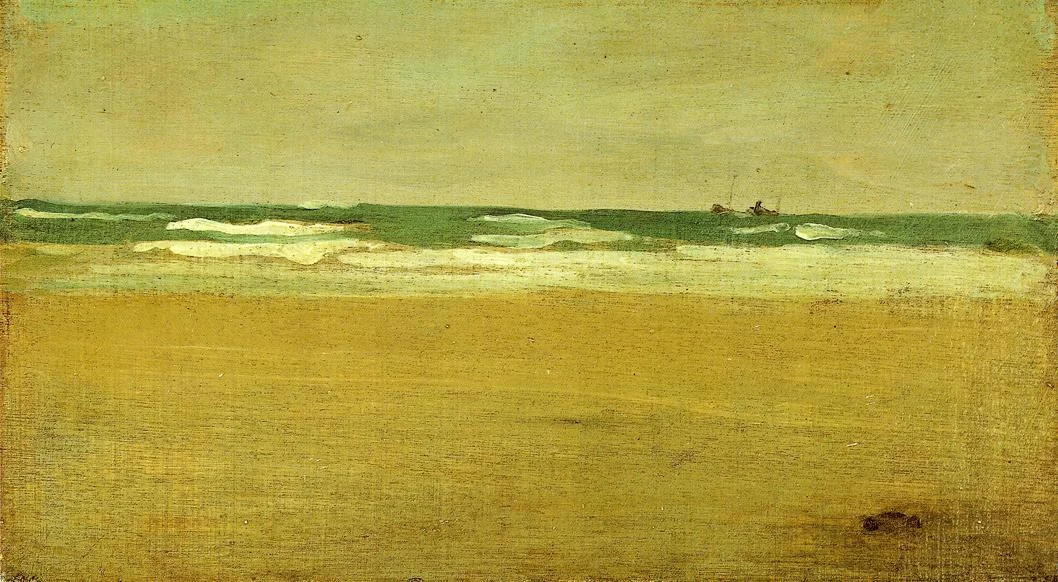
James McNeill Whistler, Angry Sea
I have often thought of this in painting - to be able to see the world again as newborn babies, trying to make sense of things before any naming, before the awareness of space or distance, or any idea of separateness.
In the first days and month of our lives, we exist in swirling beauty and wonder and curiosity and continual discovery.
What happens to that kind of primordial consciousness? It gets lost somewhere along the way in our need to understand and control our environment.
There is often something in the journey of the artist that eventually takes them full circle in their later years. You see them stripping everything down, letting go of manufactured precepts in order to get back to the prime essence of what we know to be real and true.
I don't have any more to say about that. I just find it deeply curious and moving whenever I see this kind of reduction in the late work of an artist.